Reviewing the Big Brother Baby Retro Wavy Svg for Embroidery
As a designer who spends half my life staring at stitch simulations and the other half pulling threads out of jammed machines, I approach every new digital embroidery file with a healthy dose of skepticism. We have all been there: you download a cute graphic, load it into your software, and realize the details are too fine for a standard hoop or the density is going to turn a soft cotton onesie into a cardboard shield. That is why I took a close look at the Big Brother Baby Retro Wavy Svg to see if it holds up in a real-world production environment.
This design falls squarely into the popular niche of sibling announcement gear and family matching sets. The retro wavy aesthetic is not just a trend; it is a staple in modern Crafts and boutique branding because it feels nostalgic yet fresh. But does this specific asset translate well from a screen to a needle? Let us break down how this Graphics asset performs when you move beyond sublimation and into the realm of thread and fabric.
First Impressions and Visual Personality
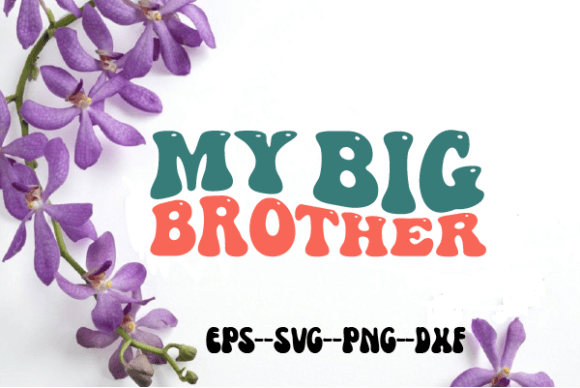
The immediate appeal of the Big Brother Baby Retro Wavy Svg lies in its fluidity. The wavy typography creates a sense of movement that static block letters often lack. For an embroidery project, this is a double-edged sword. Curves are harder to stitch cleanly than straight lines, especially at smaller sizes. However, the bold nature of the retro style suggests that the lines are thick enough to accommodate satin stitches or dense fill stitches without losing definition.
When I visualize this on a garment, I do not see a delicate, lacy accent. I see a statement piece. It has a playful, confident mood that fits perfectly with the excitement of a new baby arrival. The layout is balanced, which means it should center well in a standard 5x7 or 4x4 hoop, depending on how much negative space you leave around the text. This visual personality makes it ideal for custom apparel where the wearer wants to announce their new role with pride.
Real-World Application: The Sibling Sweatshirt Scenario
To test the viability of this design, I imagined a common client request: a big brother sweatshirt for a winter baby reveal. Sublimation, as mentioned in the product description, is great for mugs and pillows, but for wearable handmade products, embroidery offers a premium tactile experience that customers are willing to pay more for.
If I were stitching this onto a fleece-lined sweatshirt, the Big Brother Baby Retro Wavy Svg would need careful handling. Fleece is plush and can swallow small details. Because this design relies on bold, wavy shapes, it is actually a strong candidate for textured fabrics. The key would be using a cut-away stabilizer to prevent the weight of the thread from distorting the neckline. The result would be a raised, textured look that feels substantial and high-quality, far exceeding the flat print of a printable mockup.
Beyond sweatshirts, this design shines on tote bag designs. Canvas tote bags are sturdy enough to handle higher stitch density without puckering. A retro-styled big brother bag makes for an excellent personalized gift for hospital visits or sibling photo shoots. The durability of embroidery ensures that the message lasts through multiple washes, unlike some vinyl applications that may crack over time.
Navigating Technical Challenges
While the design is visually strong, there are areas where an experienced eye needs to exercise caution. The product listing notes that you will receive DXF, EPS, and SVG files. These are vector formats primarily used for cutting machines or sublimation printing. To use this for machine embroidery design work, you must first digitize it or convert it using reliable software. You cannot simply plug an SVG into an embroidery machine.
During the digitization process, pay close attention to the corners of the waves. Sharp angles in wavy text can cause thread breaks if not properly under-stitched. I recommend using a combination of satin stitch for the thinner parts of the letters and a fill stitch for broader sections to maintain consistency. If you are working with a small hoop size, you might need to simplify the design by removing extreme curves that could bunch up.
Another critical consideration is fabric choice. While this design works well on stable materials like denim, canvas, or heavy cotton, it requires care on stretchy knits. For baby embroidery on onesies, always use a hooped stabilizer and consider a lighter thread weight to keep the garment comfortable against sensitive skin. Dark fabrics present another challenge; ensure your thread colors have high contrast. A pastel thread on a navy shirt might get lost, whereas a bright white or yellow would pop effectively.
Commercial Value and Brand Consistency
For Etsy sellers and craft business owners, the versatility of this design is a major asset. It fits seamlessly into the "retro" and "minimalist" categories that are currently dominating search trends. Using a consistent visual style across your design assets helps build brand recognition. If you offer matching sets for big brothers, big sisters, and proud parents, this wavy style can serve as a unifying element.
However, professionalism is key. Before listing a finished product, always stitch out a test sample. Check for gaps in the stitching, loose threads, or distortion. A clean embroidered patch or direct-to-garment stitch job signals quality to the buyer. It builds trust and encourages repeat business. Remember, while the digital file is a tool, your skill in executing it determines the final value.
Practical Designer Notes
Before you commit to a full production run, keep these practical tips in mind:
- Test on Scrap Fabric: Always stitch a sample on the same material you plan to use for the final product. This reveals issues with tension and density.
- Check Licensing: The product description mentions commercial use for physical items like t-shirts and mugs. Verify if the license covers digital resale or if it is strictly for physical commercial embroidery projects.
- Contrast Matters: View your design in black and white to ensure the shapes are distinct. If the waves blend together, adjust the spacing.
- Stabilizer Selection: Match your stabilizer to your fabric. Cut-away for knits, tear-away for woven fabrics.
- Hoop Size Confirmation: Ensure the scaled design fits comfortably within your hoop with adequate margin for clamping.
In conclusion, the Big Brother Baby Retro Wavy Svg is a promising asset for creators who understand the transition from vector graphics to stitched art. It offers a trendy, emotional connection that resonates with families. With proper digitization and attention to fabric mechanics, it can elevate your small shop product lineup from ordinary to exceptional. Treat it not just as a file, but as a blueprint for a tangible, cherished memory.